Difebria
Systemic triazole control of scab and leaf spot, with curative reach-back.
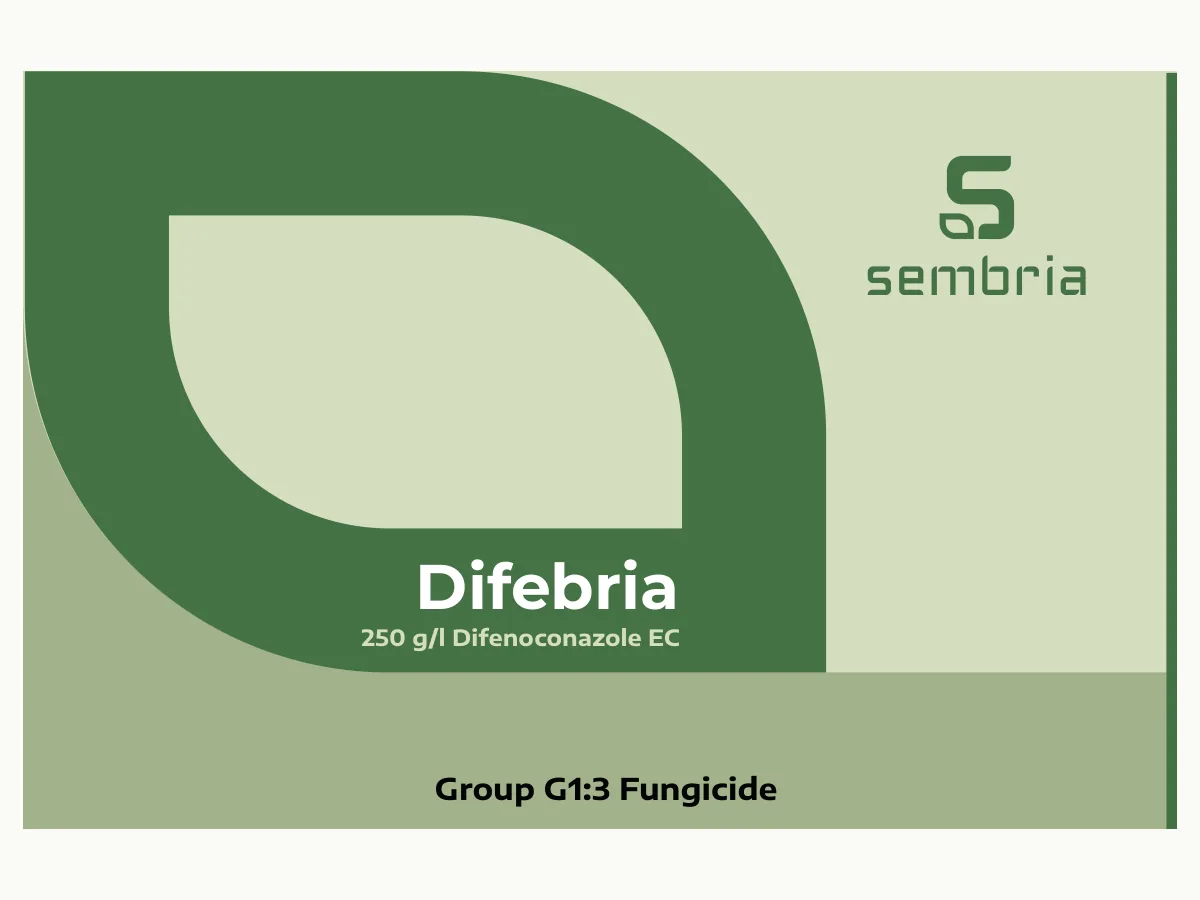
Difebria is a systemic fungicide based on difenoconazole, a triazole with both protective and curative activity. Absorbed into the leaf and moved upward within the tissue, it can stop an infection that has already begun — the reason it remains the backbone of scab programmes in apple and pear, and of Cercospora control in sugar beet. At 10 ml/100 L of water on pome fruit, it is also among the most economical fungicides in the range to use.
Characteristics
- Systemic with genuine curative activity — works after infection has started
- The standard for apple and pear scab (Venturia spp.)
- Also registered for Cercospora leaf spot and powdery mildew in sugar beet
- Very low rate on pome fruit: 10 ml/100 L water
- Four-year storage stability
- FRAC Group 3 (DMI / triazole)
How it works
Difenoconazole inhibits C14-demethylase, the enzyme fungi need to make ergosterol — the sterol that gives their cell membrane its structure. Without it the membrane cannot form correctly, and hyphal growth stops. Because the fungus is already inside the leaf when the product arrives, the systemic movement gives the curative window. FRAC Group 3.
Dosing
| Crop | Target disease | Dose | PHI (days) |
|---|---|---|---|
| Apple | Scab (Venturia inaequalis) | 10 ml/100 L water | 14 |
| Pear | Scab (Venturia pirina) | 10 ml/100 L water | 14 |
| Sugar beet | Cercospora leaf spot (Cercospora beticola) | 30 ml/da | 14 |
| Sugar beet | Powdery mildew (Erysiphe betae) | 20 ml/da | 14 |
Doses are indicative. The user is responsible for adjusting the dose to the growth stage of the crop and the conditions of the field. Apply under the guidance of an agricultural technician. Composition, method of application and dose may vary between countries for climatic, technical or legal reasons.
Application
How to apply
Apple scab: first application when flower buds start to swell (3-5 days before bud burst); second at the pink bud stage when individual flowers are visible; third when 70-80% of petals have fallen; then every 15 days while conditions favour the disease. Pear scab: same first application, second at the white rosette stage, third at 70-80% petal fall, then every 10 days. Sugar beet Cercospora: begin as foliar sprays when conditions turn favourable and the first leaf symptoms appear, continuing on the interval the product's persistence allows. Sugar beet powdery mildew: begin at first symptoms and repeat at 20-day intervals as needed.
Compatibility
Conduct preliminary mixing tests before preparing large mixtures.
Always carry out a compatibility test before preparing a tank mixture.
Safety and handling
Flammable liquid and vapour. Harmful if swallowed or inhaled; causes skin irritation and serious eye irritation. Very toxic to aquatic life with long-lasting effects. Toxic to fish and to bees — do not apply during flowering. Do not re-enter the treated area for 1 day. First aid on ingestion: administer activated charcoal and call a doctor.
Read the label before use. Do not use at home. Keep away from children, food and animal feed. Use only as recommended and at the recommended dose.
Plant protection product
This page is technical information, not an offer of sale. Availability and registration status vary by territory. Always read and follow the approved product label before use.