Chloranbria
Diamide chemistry: caterpillars stop feeding within minutes, at 12 grams per hectare.
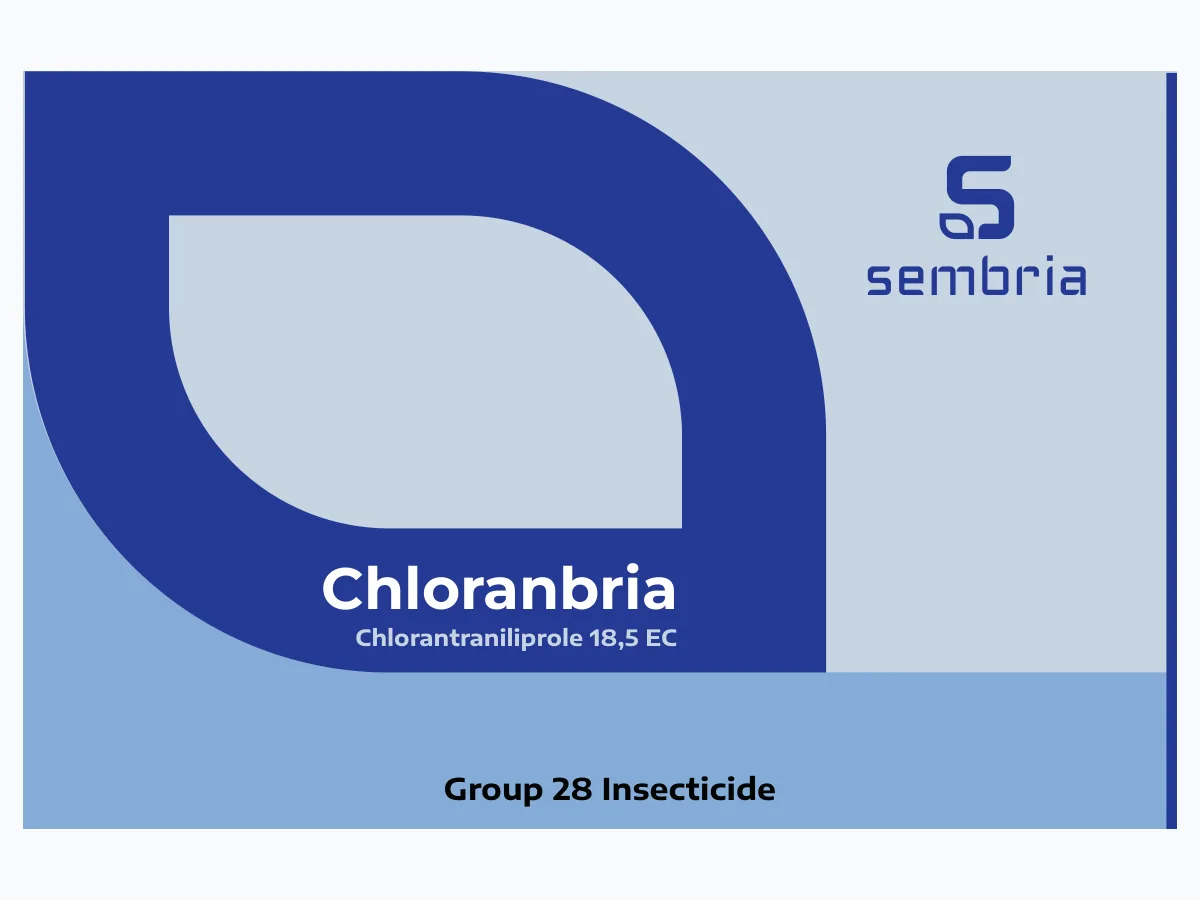
Chloranbria is a diamide insecticide based on chlorantraniliprole, the standard against which caterpillar control in vegetables is now measured. It works at a rate most products cannot approach — 12 g/ha across the entire label — and larvae stop feeding within minutes of ingestion, so crop damage halts long before the pest dies. With a one-day pre-harvest interval and no re-entry restriction once the spray has dried, it fits a continuous picking schedule without disruption.
Characteristics
- Outstanding activity on Lepidoptera: tomato fruitworm, Tuta absoluta, cotton leafworm
- Feeding stops within minutes of ingestion — damage is arrested immediately
- One flat rate across the whole label: 12 g/ha or 12 g/100 L water
- One-day pre-harvest interval; no re-entry restriction once dry
- Rainfast 1-2 hours after the spray has dried on the plant
- IRAC Group 28 — a mode of action unrelated to pyrethroids, organophosphates or neonicotinoids
How it works
Chlorantraniliprole binds the ryanodine receptor in insect muscle, forcing the uncontrolled release of stored calcium. Muscles contract and cannot relax, feeding stops almost at once, and the larva dies of paralysis over the following days. The receptor differs enough in mammals to give a very favourable safety profile. IRAC Group 28.
Dosing
| Crop | Target pest | Dose | PHI (days) |
|---|---|---|---|
| Tomato (field) | Tomato fruitworm (larvae) | 12 g/ha | 1 |
| Tomato (greenhouse) | Tomato fruitworm; cotton leafworm (larvae) | 12 g/100 L water | 1 |
| Pepper (field) | Tomato fruitworm (larvae) | 12 g/ha | 1 |
| Pepper (greenhouse) | Tomato fruitworm; cotton leafworm (larvae) | 12 g/100 L water | 1 |
| Cucumber (field) | Cotton leafworm (larvae) | 12 g/ha | 1 |
| Cucumber (greenhouse) | Cotton leafworm (larvae) | 12 g/100 L water | 1 |
| Cornichon (field) | Cotton leafworm (larvae) | 12 g/ha | 1 |
| Cornichon (greenhouse) | Cotton leafworm (larvae) | 12 g/100 L water | 1 |
| Eggplant (field) | Tomato fruitworm (larvae) | 12 g/ha | 1 |
| Eggplant (greenhouse) | Cotton leafworm | 12 g/100 L water | 1 |
Doses are indicative. The user is responsible for adjusting the dose to the growth stage of the crop and the conditions of the field. Apply under the guidance of an agricultural technician. Composition, method of application and dose may vary between countries for climatic, technical or legal reasons.
Application
How to apply
Greenhouse whitefly in tomato, pepper and eggplant: inspect 50-100 plants; treat immediately if more than 51 of 100 are infested, ideally at egg-laying or just after hatching, and re-check 10 days later. Cotton leafworm: apply at 1-2 newly hatched egg masses or 4-5 larvae per 100 plants, before the larvae disperse across the leaves. Tuta absoluta in greenhouse tomato: hang one pheromone trap per greenhouse immediately after planting, check weekly, and once the first adult is caught inspect at least 100 plants — treat if 3 of 100 carry any stage of the pest. Maximum 2 applications per season on the same area. Not for use in seedling-raising areas.
Compatibility
Conduct preliminary mixing tests before preparing large quantities.
Always carry out a compatibility test before preparing a tank mixture.
Safety and handling
Very toxic to aquatic life with long-lasting effects. Toxic to fish and to bees — do not apply during flowering. Avoid drift onto nearby mulberry trees. Wear gloves, protective clothing and eye protection. The treated area may be re-entered as soon as the product has dried.
Read the label before use. Do not use at home. Keep away from children, food and animal feed. Use only as recommended and at the recommended dose.
Plant protection product
This page is technical information, not an offer of sale. Availability and registration status vary by territory. Always read and follow the approved product label before use.